
A car accident case can change fast when distracted driving becomes part of the story. What seemed to be a simple rear-end crash or an unsafe lane change can take on a very different meaning once there’s reason to believe a driver was looking at a phone instead of the road. In Michigan, cell phone use behind the wheel remains a serious safety issue. State crash data show that 2,106 crashes involved a motor vehicle driver who was using a cell phone, and 15 of those crashes were fatal.
However, when a driver denies texting, calling, scrolling, or using an app, you often need more than assumptions to build a solid personal injury claim. That’s where digital evidence can matter. Cell phone records, app activity, time data, and location information might help show whether a driver was distracted in the moments leading up to impact. In Michigan distracted driving cases, that kind of proof can help connect careless behavior to the crash and support a stronger liability argument.
Let our competent car accident attorney in Muskegon explain how cell phone data can help prove distracted driving and why it plays such an important role in modern car accident litigation.
Why Cell Phone Data Is Critical in Distracted Driving Cases
Phones are now part of daily life. Drivers use them for calls, texts, maps, music, social media, and messaging apps, often without realizing how much attention those actions take away from the road. Even a few seconds of looking down can be enough to miss braking traffic, drift across a lane, or fail to see a pedestrian or traffic signal. That’s why phone activity can become a central issue in a crash claim. When you’re trying to show that the other driver wasn’t paying full attention, phone data might reveal behavior that fits the timing of the collision and helps explain how the crash happened.
Witnesses can help, but their accounts are not always enough on their own. A person nearby might notice a driver holding a phone, but might not see whether the driver was texting, using navigation, switching apps, or reading a notification. Some crashes happen too quickly for anyone to observe those details at all. Digital evidence helps fill those gaps. Call records, message activity, screen interaction history, and location data can provide a more precise timeline. In many cases, that makes it easier for a local car accident attorney in Muskegon to argue that distraction was not just possible, but a direct cause of the crash.
What Cell Phone Data Can Reveal After a Crash
Phone records can help tell the story of what happened in the minutes before impact. Such records might not always show every detail, but can reveal patterns that support or challenge what a driver claims after a collision. Here are some of the most useful types of phone-related evidence in distracted driving cases:
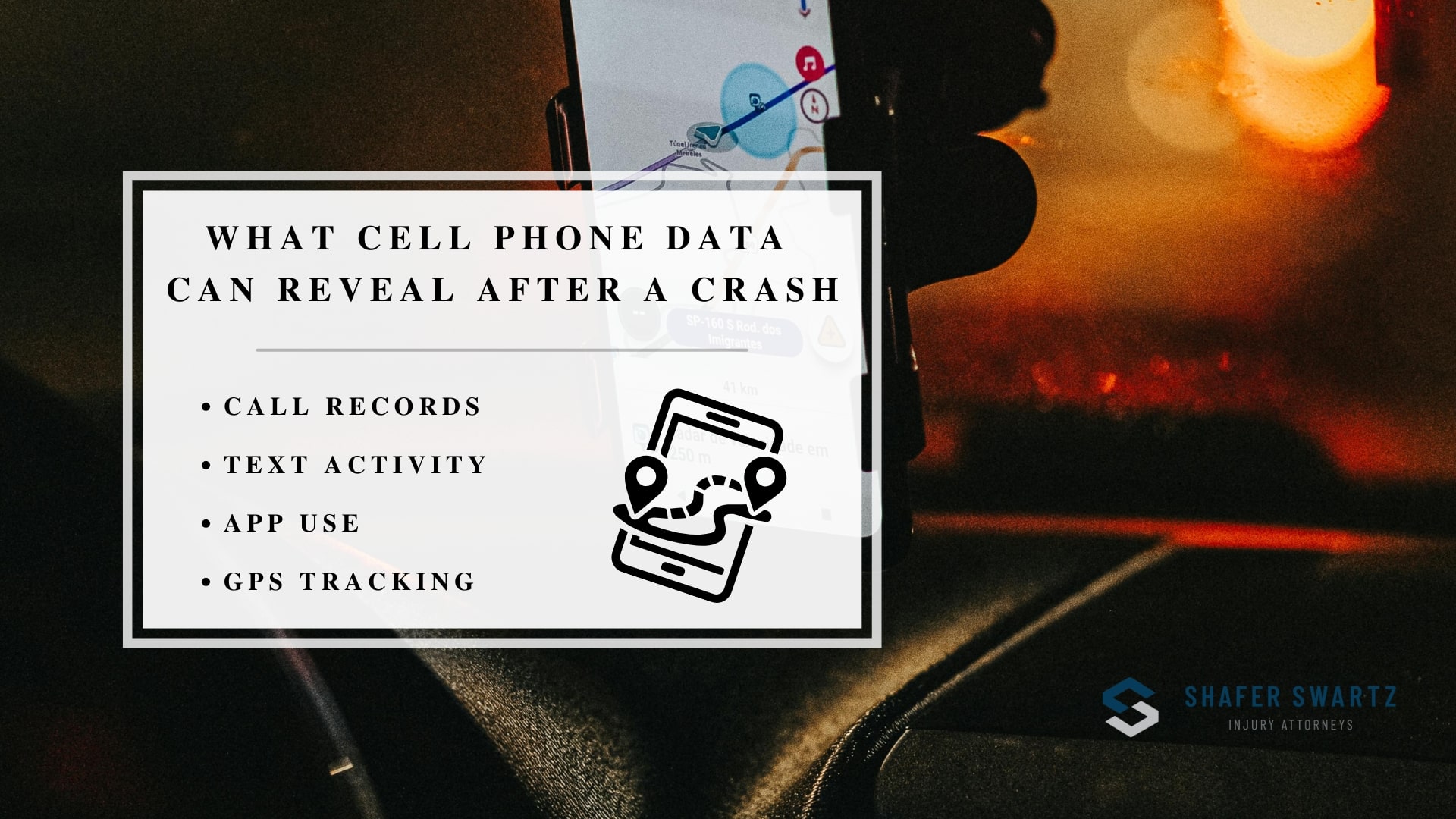
Call Records
Call logs and timestamps can show whether a driver was placing, receiving, or missing calls shortly before the crash. If a call started moments before impact, it might support the argument that the driver was focused on the device instead of traffic conditions. Even when the driver claims the phone was not being used, the records might show activity that raises questions about that statement. In some cases, the duration of the call further helps build the timeline.
Text Activity
Text message activity and metadata can reveal whether messages were sent, received, opened, or drafted around the time of the collision. Even if the content of the message is not immediately available, the timing alone can be important. If the data shows text activity seconds before a rear-end crash or lane departure, that can strongly support a distracted driving claim. It’s especially useful when the at-fault driver denies texting, but the crash pattern suggests delayed reaction time.
App Use
App usage and screen interaction records might show whether the driver was using social media, streaming audio, a shopping app, a messaging platform, or some other feature right before the accident. Distraction is not limited to texting. A driver can be just as careless while tapping through playlists, checking directions, or opening notifications. Screen activity can help show that the driver’s attention was on the device rather than on changing traffic, road hazards, or nearby vehicles.
GPS Tracking
Global Positioning System (GPS) location data and movement patterns can add another layer to the evidence. Such information might help confirm the route, speed changes, stop points, and travel direction. In some cases, GPS data helps disprove a driver’s version of events or supports the claim that the driver was actively using navigation or another app while moving. When combined with call, text, or app records, location data can create a clearer picture of what was happening just before impact.
How Attorneys Obtain Cell Phone Records
Getting phone-related evidence is not as simple as asking for it. In Michigan personal injury cases, attorneys often rely on the discovery process to seek non-privileged information relevant to the claims or defenses and proportional to the needs of the case. In practice, that rule can support requests for phone records, limited production windows, and protective measures when privacy concerns are involved. Depending on the facts, an attorney might use subpoenas, motions to compel, or court orders to pursue records tied to the time of the crash rather than seeking broad access to a person’s entire phone history.
Furthermore, some phone data might be overwritten, deleted, or lost as apps sync, update, or rotate stored information. A preservation request can put the other side, and sometimes relevant third parties, on notice that the data should be kept intact while the case moves forward. From there, the attorney might decide whether to seek records from the wireless carrier or pursue device-level extraction. Carrier records can show call times, text activity, and certain account-level details, while a device examination might reveal more detailed app use, screen interactions, or location history, if the court allows it.
It’s important to note, however, that the Stored Communications Act restricts providers of electronic communication services from voluntarily disclosing the contents of stored communications in many situations, meaning there is a legal distinction between asking for basic subscriber or transactional records and trying to obtain the actual contents of messages or other stored communications. For that reason, attorneys often tailor requests carefully and focus on metadata, timestamps, consent-based production, or court-supervised device access instead of assuming a carrier can hand over everything.
Strengthening a Distracted Driving Claim With Digital Evidence
If you believe distracted driving played a role in your accident, timing matters. Digital evidence can become harder to recover the longer you wait, especially when records are limited, devices are replaced, or critical data is erased. Working with Shafer Swartz PLC can help you take the right steps early. Our experienced car accident attorney in Muskegon can evaluate the facts, pursue the available records, and build a claim designed to show how cell phone use affected the crash. Contact us today at (231) 722-2444 or here to discuss your case.