
A dog bite can cause much more than cuts and puncture wounds. When a dog’s teeth penetrate deeply, or the force of an attack damages tissue beneath the skin, nerves can be injured. Nerve injuries can interfere with the signals that let you feel sensation or use the injured part of your body normally. Dog bite nerve damage might even cause lasting limitations, leading to additional medical treatment and changes in your everyday activities. Let our competent Muskegon dog bite attorney discuss how dog bite nerve damage can occur, the warning signs to watch for, and how lasting nerve problems might affect your personal injury claim.
How Dog Bites Can Damage Nerves
A dog’s teeth can create deep puncture wounds and tearing injuries that extend beneath the surface of your skin. If a nerve lies within the path of the injury, it can be bruised, compressed, stretched, partially damaged, or completely severed during an attack. Hands, arms, legs, and the face can be particularly vulnerable because vital nerves run through these parts of the body. Bite injuries involving the hands, for instance, can be disruptive, as even a small loss of sensation or movement can affect gripping, writing, typing, and other tasks requiring precise control, while injuries to the legs might interfere with walking and balance.
Note that nerve problems can develop after the initial injury. Swelling around a wound might place pressure on nearby nerves, while scar tissue that forms during healing can sometimes interfere with normal nerve function. Since immediate injuries can initially hide neurological symptoms, you might not recognize nerve problems right away. Some symptoms appear quickly, while others become more noticeable over the following hours or days. If you experience changes in sensation or movement after a dog bite, a medical evaluation can help determine whether deeper structures have been affected.
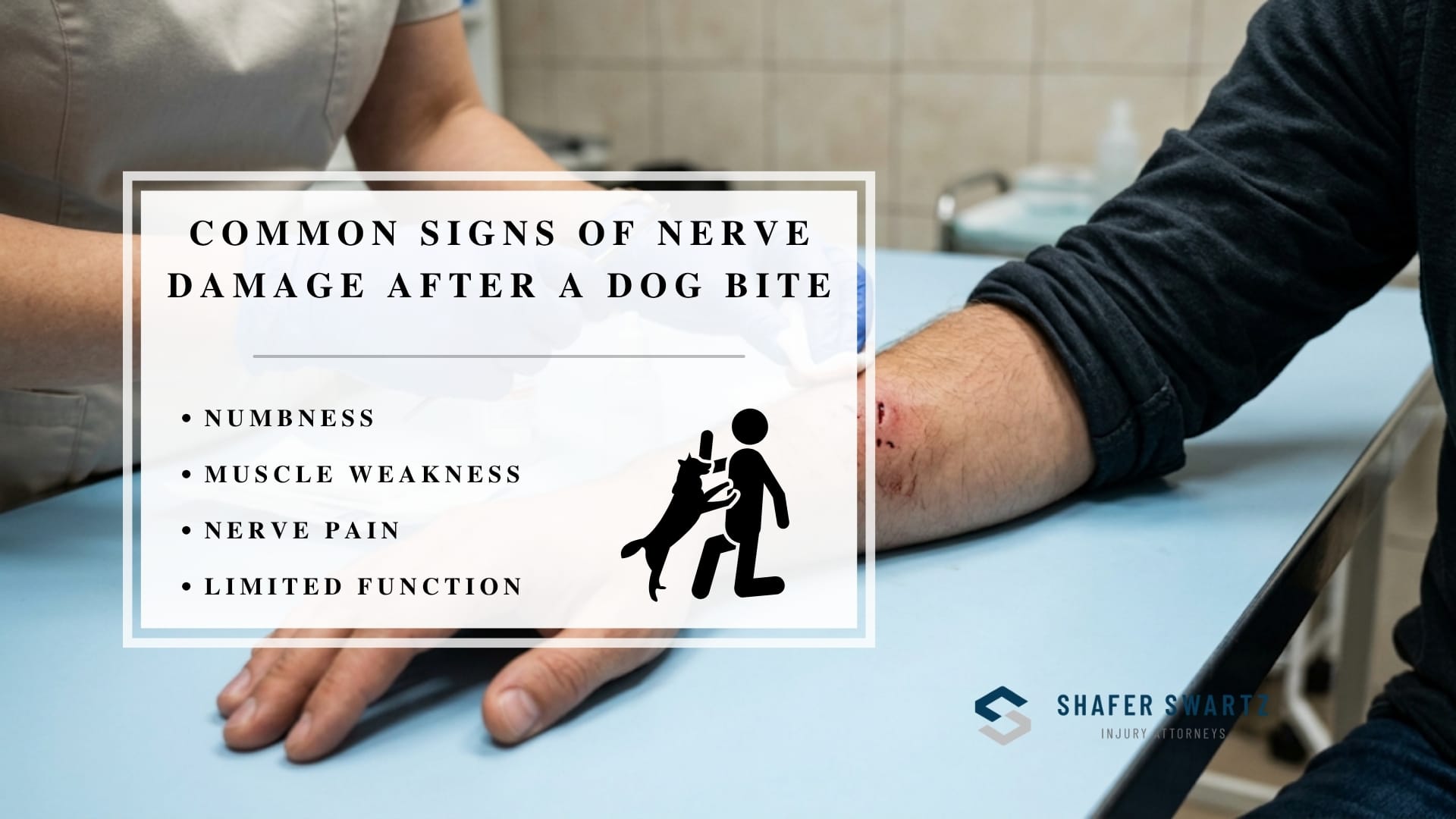
Common Signs of Nerve Damage After a Dog Bite
Peripheral nerve injuries can produce different symptoms depending on which nerve was affected and how severe the damage is. Paying attention to changes in sensation and movement can help you recognize problems that might require further medical care.
Numbness
Numbness or tingling near the bite might occur when a sensory nerve has been injured, and you might notice that part of your hand, arm, leg, face, or another affected area feels unusually numb or has a “pins and needles” sensation. In some cases, the loss of sensation extends beyond the immediate wound because the damaged nerve serves a larger area of the body. Persistent numbness might create safety concerns if you cannot properly feel pressure or pain.
Muscle Weakness
Nerve injuries can interfere with the signals that tell your muscles to move. For example, a dog bite to your hand or wrist could reduce grip strength and make it harder to hold tools, type, write, open containers, or perform other routine tasks. An injury to the leg can affect your ability to stand or walk normally. Weakness that continues after the initial pain and swelling improve must be evaluated because it might point to damage involving nerves that control muscle movement.
Nerve Pain
Damaged nerves can produce pain that feels different from the soreness normally associated with a wound, and you might experience burning, shooting, stabbing, or electric-like sensations around the bite or along the path of the affected nerve. These symptoms can occur continuously or come and go without warning. Nerve pain might further interfere with sleep, concentration, exercise, and other daily activities, particularly when symptoms continue for weeks or months.
Limited Function
Dog bite nerve damage might reduce movement or sensitivity in the injured area, and you might have difficulty bending a finger, moving your wrist, lifting your foot, or making certain facial expressions, depending on where the bite occurred. Even smaller changes in coordination or sensation can affect tasks that require precision. When these problems persist, rehabilitation or additional medical treatment might be necessary to help restore as much function as possible.
How Nerve Damage Affects a Dog Bite Injury Claim
A nerve injury can make a dog bite claim more complicated because the effects might continue well beyond the initial emergency treatment. If the damage is serious or permanent, several types of losses might need to be considered when determining the full impact of the injury.
Medical Costs
Dog bite nerve damage might require more extensive treatment than a straightforward wound. In addition to emergency care, you might need follow-up visits, diagnostic testing, medication, physical therapy, occupational therapy, or consultations with specialists. Serious injuries might require surgery or other procedures aimed at repairing damaged tissue or improving function. Rehabilitation can continue for months depending on the location and severity of the injury.
Work Limitations
A nerve injury can prevent you from performing your normal job duties, particularly if your work requires lifting, repetitive hand movements, driving, or operating equipment, and you might have to miss work while you recover or attend frequent medical and therapy appointments. Further, you might be unable to perform the same tasks or work the same number of hours. When the injury results in lasting functional limitations, it can affect your ability to earn income in the future.
Permanent Impairment
Some nerve injuries improve with treatment and time, while others leave permanent weakness, numbness, pain, or reduced mobility. Lasting loss of function can significantly change the value of your claim because the effects extend beyond short-term medical bills. Specialist evaluations, therapy reports, and other evidence can help demonstrate how the injury affects your ability to use the injured part of your body and whether those limitations are expected to continue.
Daily Impact
The consequences of a serious dog bite are not limited to financial expenses. Ongoing nerve pain may interfere with sleeping or exercising, while weakness or loss of sensation can make simple tasks, such as cooking, driving, dressing, or caring for your family, more difficult. Perhaps you might even need to give up hobbies or activities you previously enjoyed. These effects can be relevant when evaluating pain and suffering, as well as a reduction in quality of life.
Protecting Your Claim After a Serious Dog Bite Injury
If you develop numbness, tingling, weakness, burning pain, or problems moving the injured area after a dog attack, seek medical evaluation promptly. Tell your healthcare provider about every symptom you experience, even if it seems minor at first. As your recovery continues, keep track of changes in your strength, sensation, mobility, and ability to complete everyday tasks. Save medical records, therapy information, bills, work restrictions, wage records, and other documentation showing how the dog bite nerve damage has affected you.
Long-term nerve injuries can make it difficult to determine the full impact of a dog bite claim before you understand your prognosis and future treatment needs. Shafer Swartz PLC can help you examine your options when a dog attack causes ongoing pain or loss of function. Our competent Muskegon dog bite attorneys can review the circumstances of the attack, gather documentation of your injuries and financial losses, and pursue the compensation available for the harm you have suffered. Contact us today at (231) 722-2444 or here to discuss your case.