
Dog bite injuries are more common than many people realize. Approximately 4.5 million people are bitten by dogs every year in the U.S., and some of them suffer injuries that result in scarring and disfigurement. These injuries can affect how you feel about your appearance, how you move, and how comfortable you are in public or at work. In serious personal injury cases, dog bite scarring might require ongoing medical care, scar revision procedures, therapy, or prolonged treatment.
Let our seasoned Muskegon dog bite attorney discuss how dog bite scarring and disfigurement can become a long-term injury and how claims for such injuries are evaluated in Michigan.
Why Dog Bite Scarring Can Become a Long-Term Injury
Dog bites often cause damage beneath the surface of the skin. A bite might involve deep puncture wounds, tearing, crushed tissue, or damage to muscles, tendons, nerves, and blood vessels. Even if the wound is treated quickly, the healing process can be unpredictable. Some wounds close with thin, flat scars, while others heal with raised, thick, or uneven scar tissue. When the bite involves tearing or missing tissue, the scar might be more noticeable and harder to repair. Injuries to the face, hands, arms, and legs are especially concerning because these areas are visible and often involved in daily movement.
Infection can further make dog bite scarring worse. Dog bites can introduce bacteria deep into the wound, and an infection might lead to additional tissue damage, delayed healing, or more noticeable scarring. Children might face even greater long-term effects because their bodies are still growing and their emotional development is still taking shape. A child with a visible scar might struggle with teasing, embarrassment, fear of dogs, or anxiety in social settings. As the child grows, the scar might change in appearance as well, and that can create a need for future medical evaluation or treatment.
How Michigan Dog Bite Claims Evaluate Disfigurement
In a Michigan dog bite personal injury claim, disfigurement is often evaluated by looking at how the injury changed your appearance and whether that change is expected to be permanent. Visible scarring, uneven skin texture, loss of tissue, or scars that pull at nearby features might all be considered. For example, a scar near the eye, mouth, or nose might affect facial expression, while a scar on the arm or leg might be noticeable whenever you wear short sleeves, shorts, or swimwear. The location, size, thickness, and shape of the scar, and whether it causes embarrassment or changes in how you interact with others, can all matter.
Furthermore, disfigurement is not limited to appearance. Tissue damage from a dog bite can lead to tightness, reduced movement, weakness, numbness, or sensitivity. These functional issues might affect your ability to work, exercise, care for yourself, or complete normal daily tasks. Medical documentation, including treatment records, emergency room notes, surgical reports, follow-up visits, physical therapy records, and specialist evaluations, can help explain the full impact of the injury. Photographs might be essential to show the wound at different stages, from the initial injury to the healing process and final scarring.
Medical Treatment and Future Care Costs
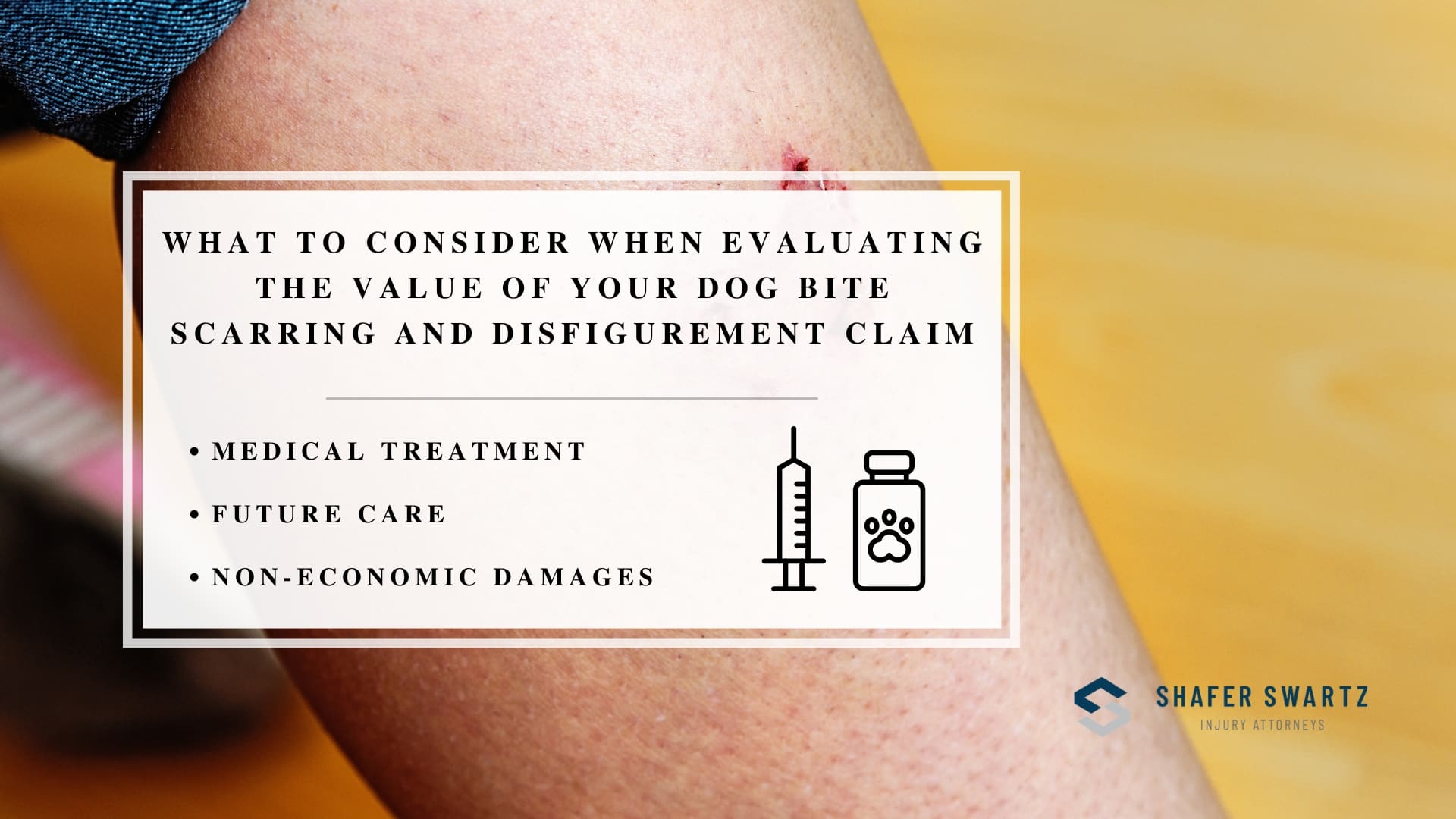
The cost of a dog bite injury often goes beyond the first hospital visit. When dog bite scarring becomes a long-term concern, your personal injury claim might need to account for both the treatment you already received and the care you might need later.
Immediate Care
After a dog bite, you might need wound cleaning, stitches, bandages, antibiotics, or pain medication. Some bites require a tetanus shot or other preventive care. These early records can show how serious the wound was from the beginning. If the bite involved deep punctures, torn skin, or exposed tissue, those details can help explain why scarring later developed. Infection care is especially important because an infected wound can heal more slowly and leave a more noticeable scar.
Scar Surgery
Some scars improve over time, but others might need plastic surgery or scar revision procedures. These treatments can help reduce the size, thickness, tightness, or visibility of the scar. In some cases, a person might need more than one procedure, especially when the bite causes significant tissue damage or affects the face, hands, or other visible areas. While scar revision might not completely erase the mark, it can make the appearance less severe and improve comfort.
Physical Therapy
If the dog bite affects muscles, tendons, nerves, or joints, you might need physical therapy to regain strength, restore range of motion, and manage pain. Scar tissue can tighten over time, making it harder to move the injured area comfortably. That’s common with injuries to the hands, arms, legs, or around joints. Physical therapy records can help establish how the injury affects your daily life, including your ability to work, drive, write, lift, walk, care for yourself, or handle daily tasks.
Future Treatment
Long-term care might include dermatology visits, laser treatment, injections, reconstructive care, or follow-up evaluations with specialists. Children, in particular, might need future treatment because a scar can change in appearance or create new problems as the body develops. A local Muskegon dog bite attorney can help you look at the full picture of your treatment needs, including future care that might be necessary to manage scarring, discomfort, or appearance changes.
Non-Economic Damages From Scarring
Not every loss from a dog bite can be measured with a receipt or medical bill. Scarring can affect how you feel, how you interact with others, and how comfortable you are in your own body. These losses are called non-economic damages, which focus on the personal impact of the injury.
Pain and Suffering
Pain and suffering might persist even after the wound closes, and you might deal with burning, itching, tightness, tenderness, or sensitivity around the scar. The recovery process itself can be difficult, especially if the injury requires repeated dressing changes, stitches, infection care, or surgery. When evaluating non-economic damages, the claim might consider how long the pain lasted, how intense it was, and whether it continues to affect your comfort.
Emotional Strain
Dog bite scarring can cause emotional distress, embarrassment, or anxiety. A visible scar might make you feel self-conscious in public, in photos, at work, or around friends and family. Some people might avoid certain clothing, social events, or activities so others won’t notice or ask about the scar. Anxiety around dogs can develop after a sudden or violent attack. These emotional effects are real and can be part of the long-term damage caused by the dog bite injury.
Daily Confidence
Scarring can affect your confidence at work, school, and in social settings. Children might struggle with teasing, questions from classmates, or fear of standing out. Adults might feel uncomfortable in professional settings or customer-facing jobs. Dog bite scarring can further affect hobbies, exercise, dating, and everyday routines. If the scar interferes with how you live or connect with others, such changes might be considered when evaluating the value of your claim.
Protecting Your Rights After a Serious Dog Bite Injury
A serious dog bite can leave you with more than a painful memory. When the injury causes dog bite scarring, disfigurement, nerve damage, limited movement, or emotional distress, the long-term effects can change how you live each day, where you might need follow-up care, scar treatment, therapy, or future medical procedures, and even deal with embarrassment, anxiety, or loss of confidence because of visible scars. These damages deserve careful attention, especially when the full impact of the injury is not clear right away.
Shafer Swartz PLC can help you protect your rights and build a stronger dog bite claim. Our competent Muskegon dog bite attorney can review what happened, gather medical records, document the progress of your scarring, and help show how the injury has affected your daily life. We can evaluate future care needs, non-economic damages, and the long-term value of your claim so you are not pressured into accepting less than what your case might be worth. Contact us today at (231) 722-2444 or here to discuss your case.