

Motorcycle crashes don’t always happen because of rider error or collisions with other vehicles. In many cases, the real danger comes from the road itself. Poor maintenance, sudden defects, and debris can turn an otherwise normal ride into a serious accident in seconds. Unlike drivers in enclosed vehicles, you, as a motorcycle rider, have little protection when your tires hit an unexpected hazard. Even a small defect can cause you to lose control, particularly at speed or while reacting to traffic around you.
Let our qualified Muskegon motorcycle accident attorney further discuss how road hazards contribute to motorcycle crashes and who might be held accountable when poor maintenance leads to serious injuries.
How Road Hazards Contribute to Motorcycle Crashes
Motorcycles rely on balance, traction, and precise steering. Unlike cars, motorcycles don’t have four wheels or a stable frame to keep you upright when the pavement changes unexpectedly. Because of that, the margin for error is extremely small. Even small roadway defects can cause a motorcycle to lose traction, wobble, or tip over. Here are some of the common motorcycle road hazards that contribute to crashes:
- Potholes
A deep or poorly marked pothole can throw your front wheel off balance instantly. If your tire drops into the hole or strikes the edge at speed, you might be ejected from the motorcycle or forced into another lane. Even shallow potholes can cause tire damage or steering instability, especially on highways or poorly maintained city roads.
- Loose Gravel and Sand
Loose gravel often appears after road repairs, during construction projects, or following winter weather. Sand and small stones reduce traction, making it difficult to brake, turn, or accelerate safely. When your tires lose grip, the bike can slide out from under you, particularly during turns or when you are trying to avoid another vehicle.
- Uneven or Broken Pavement
Uneven pavement or cracked road surfaces can interfere with your motorcycle balance. These defects are common where roads have been patched repeatedly or where utility work was done and not properly restored. Hitting uneven pavement while leaning into a turn or changing lanes increases the risk of a sudden loss of control.
- Construction Debris
Construction zones sometimes leave behind hazards, such as loose asphalt, metal plates, nails, or chunks of concrete. If warning signs are missing or debris is not cleared promptly, motorcyclists might not have enough time to react. Striking debris can cause blowouts, loss of traction, or violent swerving into traffic.
Road hazards become even more dangerous at higher speeds or when you are forced to make quick evasive maneuvers to avoid cars, pedestrians, or other obstacles. A sudden swerve to miss a pothole or debris can lead to a secondary crash with another vehicle or a fixed object. With that increased vulnerability, poorly maintained roads pose a serious and often underestimated threat to motorcyclists.
Who May Be Liable for Road Hazard Motorcycle Accidents
Michigan law recognizes that certain parties have a duty to keep roads reasonably safe for public travel, and liability depends on who has control over the hazard. The parties that might be held accountable in motorcycle road hazard cases include:
Government Agencies
Michigan government agencies have a legal duty to keep public roads “in reasonable repair and in a condition reasonably safe and fit for travel.” That includes fixing potholes, addressing uneven pavement, and ensuring construction zones are properly maintained. If a governmental agency knew or should have known about a road defect but failed to repair it within a reasonable time, that agency might be liable for resulting injuries.
Contractors
Private contractors often handle road construction and repair work. Michigan law requires such contractors to follow state and federal safety standards, properly mark construction zones, and keep work areas free of avoidable hazards. If loose gravel, unsafe drop-offs, or unmarked obstacles are left behind during or after the project, a contractor might be held accountable for a crash caused under general negligence principles.
Private Property Owners
Liability does not always stop at the edge of the road. Under Michigan premises liability, private property owners might be responsible if hazardous conditions from their property end up on a public roadway and contribute to a motorcycle crash. Examples include landscaping materials that spill into the street or poor drainage from a business lot that causes slick conditions. The general principle of duty of care applies.
Proving Negligence in Road Hazard Motorcycle Claims
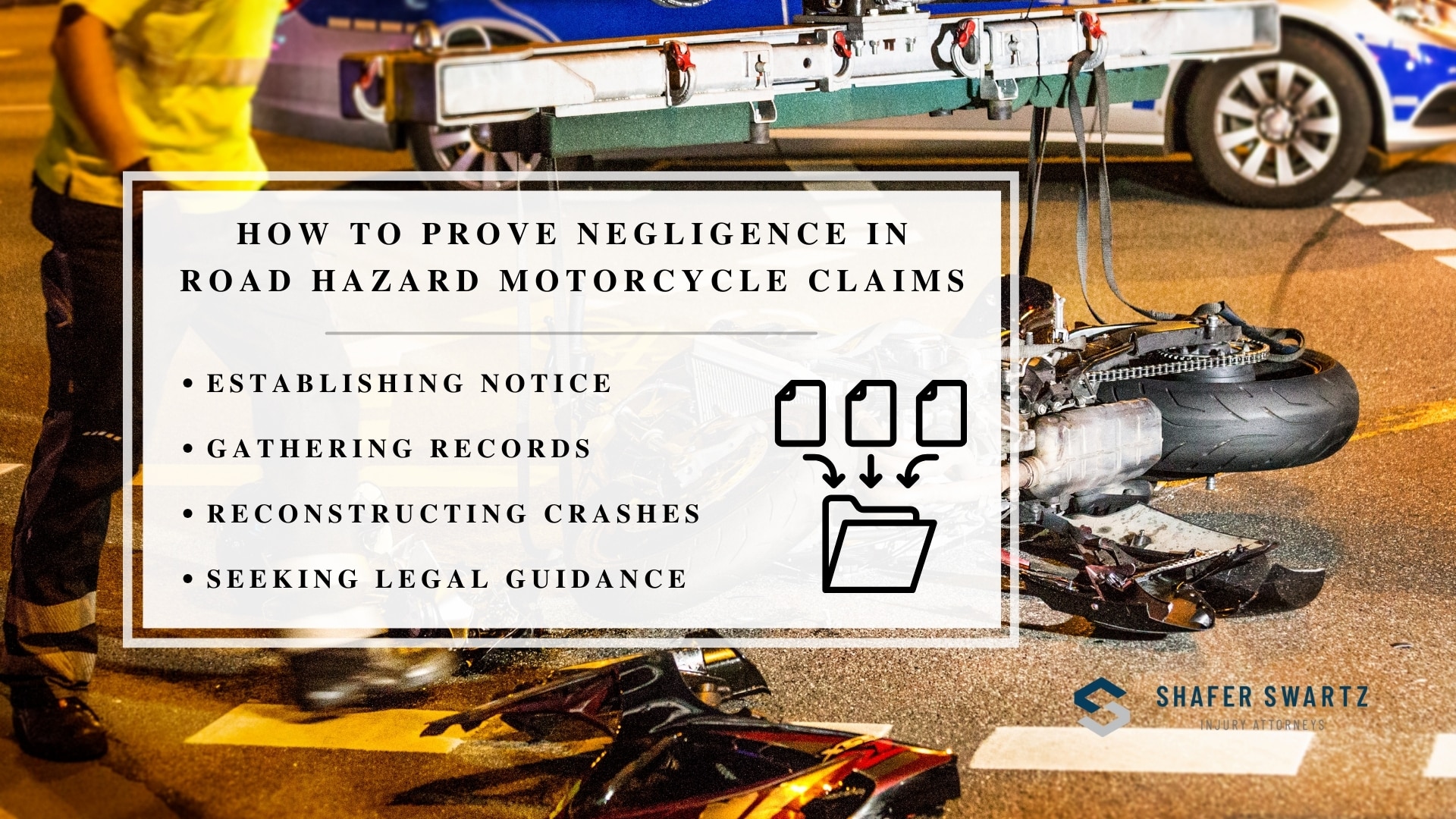
Road hazard motorcycle claims are not always straightforward. Even when the roadway condition clearly caused your crash, you still have to prove that someone was legally responsible for allowing that hazard to exist. That requires showing negligence, meaning you need to establish that someone had a legal duty to maintain the roadway, failed to do so, and caused your injuries as a result. Here are the key elements often used to build a strong personal injury case involving motorcycle road hazards:
Establishing Notice
Actual notice means the party was directly aware of the hazard. For example, the government agency might have received complaints about a deep pothole, or a construction company might have created uneven pavement during a repair project. Constructive notice applies when the hazard existed long enough that it should have been discovered through regular inspections and maintenance. Establishing notice can support the argument that the hazard should have been addressed before your motorcycle crash occurred.
Gathering Records
Maintenance records can show when a public road was last inspected, whether repairs were scheduled, or if known defects were ignored. Prior complaints from citizens, internal emails, and work orders can help prove that the hazard was not addressed in a timely manner. In some cases, expert witness testimony from roadway engineers or safety specialists can be used to explain how proper maintenance would have prevented the crash. Together, these can establish a pattern of neglect rather than a sudden, unavoidable defect.
Reconstructing Crashes
Accident reconstruction and roadway inspections provide technical support for your personal injury claim. Reconstruction experts can analyze skid marks, damage to your motorcycle, debris patterns, and the condition of the road surface to show how the hazard caused the crash. Photos, measurements, and surface testing taken soon after the crash can preserve evidence before repairs are made. These inspections help document pothole depth or uneven pavement height differences that might no longer be visible later.
Seeking Legal Guidance
Road hazard claims often involve multiple parties, strict deadlines, and technical defenses. A local Muskegon motorcycle accident attorney knows how to gather evidence quickly, work with qualified experts, comply with Michigan notice requirements, and build a clear narrative showing how poor maintenance or unsafe conditions led to your motorcycle crash. Legal guidance helps level the playing field when you are facing government agencies, contractors, or insurance adjusters that are prepared to deny responsibility.
Why Motorcycle Accident Victims Need Legal Representation
Motorcycle crashes caused by poor road maintenance can leave you facing serious injuries, lost income, and long-term recovery. At the same time, the parties responsible might deny fault or argue that the hazard was unavoidable. Having experienced legal representation helps protect your rights and strengthens your claim from the start.
Shafer Swartz PLC understands how road hazard cases work and what it takes to prove negligence. Our competent Muskegon motorcycle accident attorneys know how to investigate dangerous road conditions, identify the responsible parties, and pursue the compensation you deserve. Contact us today at (231) 722-2444 or here for a consultation.