
A tire blowout can turn an ordinary drive into a devastating crash within seconds. When a tire suddenly loses pressure or comes apart, you often have little time to react, especially when traveling at highway speeds. The National Highway Traffic Safety Administration (NHTSA) reports that 511 people died in tire-related crashes in 2024, showing how dangerous tire failures can become on the road.
After a tire blowout accident in Michigan, determining who is responsible is not always straightforward. The driver might have continued using a tire that was visibly unsafe, the tire itself might have contained a defect, or a repair shop might have made a mistake during installation or maintenance. In some car accident cases, more than one party might have contributed to the failure and share responsibility.
Let our qualified Muskegon car accident attorney further explain why tire blowouts can cause serious accidents, when drivers, manufacturers, sellers, or maintenance companies can be responsible, and what evidence can help you build a strong personal injury claim.
Why Tire Blowouts Cause Serious Car Accidents
A blowout can cause an immediate change in how a vehicle handles. At highway speeds, the affected tire might suddenly lose its ability to support and stabilize the vehicle, causing the vehicle to pull toward one side or lose control. A driver who reacts too sharply by braking hard or making a sudden steering correction can make the situation even worse. The result can be a rollover, collision with a guardrail, departure from the roadway, or crash involving several nearby vehicles. Trucks, SUVs, vans, and heavily loaded vehicles face additional risks because their greater weight can make sudden changes in stability more difficult to control.
The cause of the tire failure matters because a blowout alone does not establish who should be held responsible. Tires can fail because of underinflation, overloading, excessive wear, road hazards, manufacturing problems, improper repairs, or other factors. The NHTSA warns that poor maintenance, including insufficient tire pressure, can contribute to blowouts and tread separation, while overloading can increase heat and stress within a tire. Determining what happened before the blowout can help establish whether responsibility rests with the driver, a manufacturer, a seller, a maintenance company, or a combination of parties.
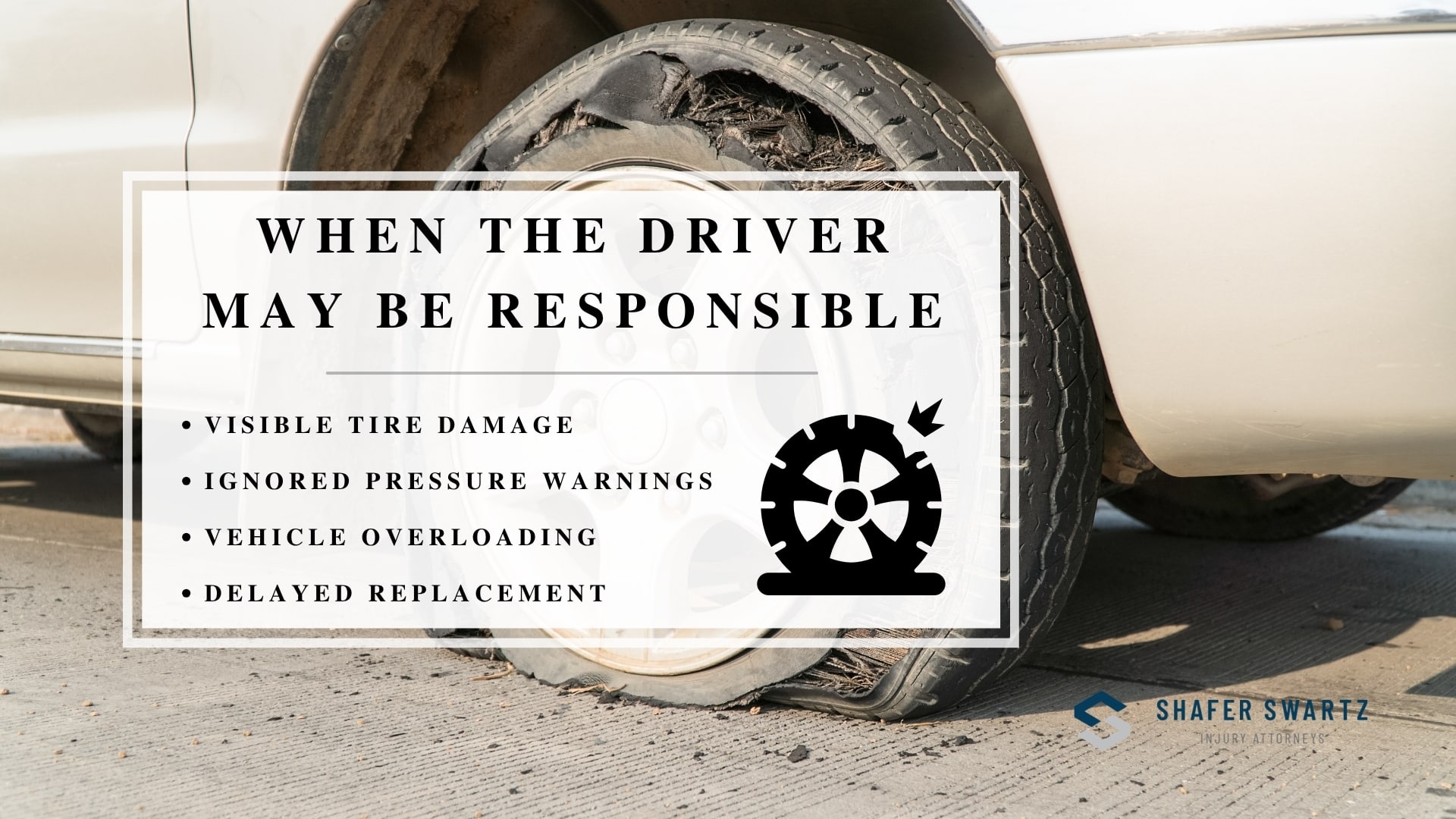
When the Driver May Be Responsible
Drivers are expected to operate vehicles that are reasonably safe for the road. When warning signs show that a tire might be unsafe, ignoring them can increase the risk of a blowout and become important evidence in a negligence claim.
Visible Tire Damage
A driver might bear responsibility when a tire was visibly worn, cracked, bulging, or otherwise damaged before the crash. Michigan law prohibits operating a vehicle on a highway with a tire considered unsafe, including tires with exposed cords, evidence of tread separation, or tread worn to or below the minimum levels. If a driver knew or reasonably should have noticed a serious tire problem but continued driving, that decision might support an argument that poor maintenance contributed to the crash.
Ignored Pressure Warnings
Underinflation causes additional flexing and heat buildup, which can increase stress on the tire and raise the risk of failure. The NHTSA advises drivers to check tire pressure regularly and take action when a Tire Pressure Monitoring System (TPMS) warning appears. If you repeatedly refill a leaking tire without investigating why it is losing air, or continue driving despite persistent warnings, that history might become substantial evidence when determining responsibility after a blowout.
Vehicle Overloading
Every tire is designed to operate within certain load limits. Loading a vehicle beyond those limits can add stress to the tires, especially during longer trips or high-speed driving. If a tire blowout accident happens while a vehicle is overloaded with passengers, cargo, equipment, or other materials, investigators might examine whether the excessive weight contributed to the failure, and if it did, the driver or another party responsible for loading the vehicle might face liability.
Delayed Replacement
Tires do not last forever, even when the tread still appears usable. Rubber and other tire components can deteriorate with age, mileage, environmental exposure, and repeated stress. The NHTSA notes that vehicle and tire manufacturers recommend replacing tires that reach approximately six to 10 years of age regardless of treadwear. Continued use of an old or deteriorated tire despite clear recommendations and guidance to replace it might become part of the liability investigation.
When a Manufacturer or Seller May Be Liable
Sometimes, the driver did what was reasonably expected, but the tire still failed because there was something wrong with the product itself. In those cases, investigators might look at how the tire was designed, manufactured, distributed, and sold.
Construction Defects
A tire contains several layers and components that work together under heat, pressure, road impact, and repeated rotation. Problems involving the tread, sidewall, belts, bonding materials, or internal layers can weaken the tire and lead to unexpected failure. In Michigan, a product liability claim based on a production defect requires evidence addressing whether the product was reasonably safe when it left the manufacturer or seller and whether an available production practice could have prevented the harm.
Tread Separation
Tread separation happens when the tread begins pulling away from the underlying structure of the tire, and it can result from several causes, so separation discovered after a Michigan car accident does not automatically prove a manufacturing defect. An expert witness inspection is often necessary to determine whether the separation developed because of defective materials or manufacturing, or instead resulted from underinflation, overloading, impact damage, improper repairs, or extended use.
Unsafe Design
Liability might be considered when the problem involves the tire design rather than an isolated mistake during production. For example, evidence might show that a design made the tire unnecessarily vulnerable to a foreseeable failure when a safer practical alternative was available. A tire seller, however, is not automatically responsible simply because it sold a defective tire. Michigan law provides that a nonmanufacturer seller generally must have failed to exercise reasonable care with respect to the product or made an express warranty that the product failed to meet before seller liability might apply.
Liability for Maintenance and Installation Failures
Even a properly manufactured tire can become unsafe when it is installed, repaired, or serviced incorrectly. When a tire shop, dealership, mechanic, or other maintenance provider performs careless work, its service might become the central issue during the investigation.
Service Errors
Tires must be mounted, balanced, and inflated properly for the vehicle. Incorrect tire installation, improper inflation pressure, damage during mounting, or other service mistakes can affect tire performance and durability. Inflating a tire too far above or below the proper pressure, for instance, can place unnecessary stress on it. Service records, invoices, technician notes, and the condition of the wheel and tire can help determine whether recent service contributed to a later tire failure.
Missed Damage
When you take your vehicle to a professional for tire service, obvious safety problems need to be identified and addressed. A technician could potentially share responsibility if serious damage was visible during an inspection or service but was overlooked or the vehicle was returned to you without an appropriate warning. Liability of the company often depends on what conditions should reasonably have been discovered and whether the failure caused the tire blowout accident in Michigan.
Improper Repairs
Not every damaged tire can be safely repaired, and the repair method matters. An incorrect repair might weaken the tire or allow damage to continue beneath the surface. Problems can further arise when a shop installs a tire with the wrong size, load rating, speed rating, or other specifications for the vehicle. A negligence claim might require examining exactly what the shop did, what tire was installed, the manufacturer specifications, and whether accepted service procedures were followed.
Building a Strong Tire Blowout Accident Claim
After a serious tire blowout accident in Michigan, do not discard the damaged tire, if possible, because its tread, sidewall, internal components, wear patterns, and other physical evidence might help experts determine why it failed. Records can be just as important. Maintenance invoices, tire purchase receipts, pressure or service records, photographs, vehicle information, warranty documents, and recall information can help establish the tire history.
Shafer Swartz PLC can investigate the circumstances surrounding the blowout, preserve essential evidence, review maintenance and purchase records, and identify parties that might be responsible. Our experienced Muskegon car accident attorneys can work with appropriate experts when technical analysis of the tire, wheel, vehicle, or service history is necessary. Contact us at (231) 722-2444 or here today. Let us help you pursue compensation for your injuries and losses.