

When a person dies because of an accident or injury, the legal case often focuses on what the surviving family has lost. That might include loss of financial support, loss of companionship, funeral costs, and other damages tied to the death. But in some Michigan wrongful death cases, another issue that might arise is whether or not the victim experienced conscious pain before passing away.
That issue can matter when the person did not die instantly. If the person lived for any period of time after the injury and was aware of pain, fear, distress, or what was happening around them, the estate might be able to seek compensation for that suffering. Let our qualified personal injury attorney in Michigan discuss what conscious pain and suffering means and the evidence you need to prove it.
What Conscious Pain and Suffering Means
Conscious pain and suffering refers to pain, fear, awareness, or distress experienced by an injured person before death. It might include physical pain from the injury itself, fear caused by the accident, awareness of danger, breathing difficulty, attempts to speak, crying out, or reacting to medical treatment. The key point is that the person must have been conscious enough to experience the suffering during the time between the injury and death. Even if that period was short, it might still matter if the evidence shows awareness before the victim passed away.
Michigan law allows reasonable compensation for the pain and suffering, while conscious, undergone by the deceased during the period between injury and death. That’s different from wrongful death damages that compensate surviving family members for losses. For example, if a person survives for several minutes after a car accident, shows signs of pain, and later dies at the hospital, the estate might pursue damages for conscious pain and suffering. At the same time, the family can seek wrongful death damages for the personal and financial loss caused by the death.
Evidence Used to Prove Conscious Awareness
Proving conscious pain and suffering depends on piecing together several types of evidence. The goal is to show that the person had some level of awareness between the time of injury and death. A competent personal injury attorney in Michigan often looks for small but important details that point to consciousness, pain response, fear, or suffering.
Emergency Medical Records
Emergency medical records might show whether the injured person was alert, responsive, speaking, breathing on their own, or reacting to pain. Emergency Medical Services (EMS) providers often note the level of consciousness, vital signs, injuries, and responses during transport. Hospital records, including pain assessments, medication notes, and observations from doctors and nurses, might further describe changes in condition before death.
Witness Accounts
Bystanders, family members, police officers, or first responders might have seen or heard what happened in the moments after the injury and describe whether the person called for help, cried, looked frightened, or tried to move. These accounts can be critical when medical records are limited or when death occurred before the person reached the hospital, and might help support a claim that the person was conscious before passing away.
Visible Reactions
Conscious awareness does not always require clear speech. A person might show awareness through groaning, crying, facial expressions, defensive movements, attempts to breathe, or reactions to touch or pain. In some cases, even brief signs of responsiveness can matter. For example, if an injured person turns toward a voice, grips a hand, pulls away from pain, or attempts to communicate, those facts might suggest awareness.
Expert Witness Testimony
Expert witness testimonies are often needed when the evidence is disputed. An expert can review EMS records, trauma notes, autopsy findings, medication records, brain injury evidence, oxygen deprivation timelines, and witness statements. From those facts, the expert might explain whether the person had consciousness, how long that awareness might have lasted, and what type of suffering the person might have experienced.
Common Cases Where This Issue Arises
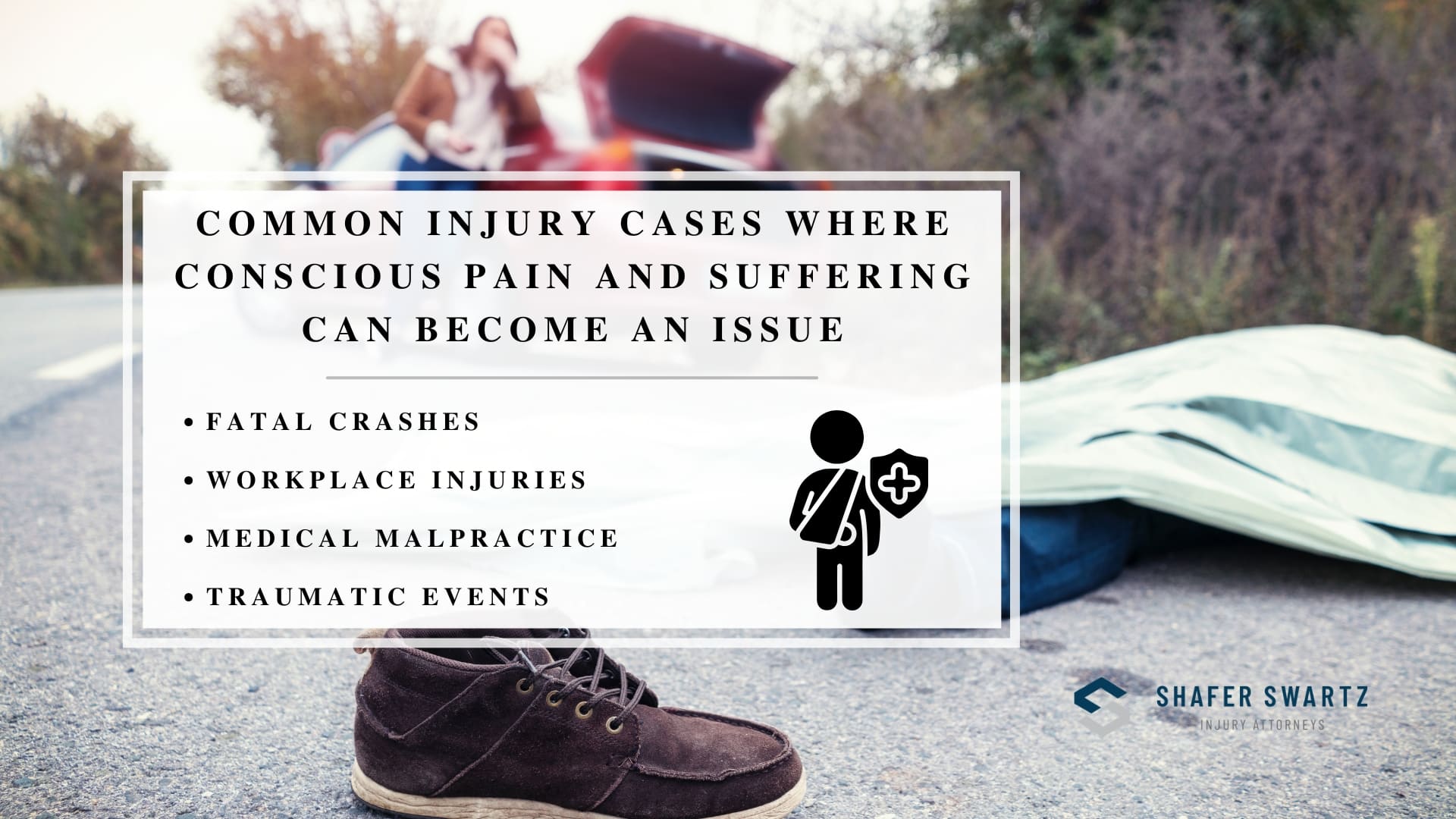
Conscious pain and suffering can become an issue in many fatal injury cases, especially when the person survives for some period after the initial injury. The time does not always need to be long. What matters is whether the evidence shows the person experienced pain, fear, distress, or awareness before death.
Fatal Crashes
Car, truck, and motorcycle accidents can cause fatal injuries, but death might not happen right away. The injured person might remain awake for minutes, hours, or even days before passing away. During that time, there might be evidence of pain, fear, confusion, breathing difficulty, or attempts to communicate. Video footage, 911 recordings, EMS notes, and hospital records might all help build the timeline and show that the person experienced conscious pain and suffering before death.
Workplace Injuries
When a fatal workplace injury occurs, the person might not die instantly, and coworkers or supervisors might witness what happened and describe the condition of the injured person immediately after the incident. These cases, however, can be legally complicated because workers’ compensation, third-party liability, and wrongful death claims might overlap. A local personal injury attorney in Michigan can help determine whether the claim is employment-related or whether another party, such as a contractor, property owner, or subcontractor, is responsible.
Medical Malpractice
Medical malpractice cases might involve conscious pain when a patient suffers because of delayed diagnosis or treatment, misdiagnosis, surgical complications, medication errors, or failure to respond to warning signs. In these situations, the suffering might happen over hours or days rather than minutes, and the patient might experience worsening pain, fear, breathing trouble, confusion, or distress before the fatal outcome. These cases often require a careful review of the medical timeline.
Traumatic Events
Conscious pain and suffering can arise from dog attacks, serious slip-and-fall cases, explosions, burns, drowning incidents, or other traumatic injury events. These cases can be especially difficult because the suffering might be intense, sudden, and frightening. A person might be aware of the attack, the fall, or the injury before losing consciousness or passing away. Witness statements, photos, videos, and emergency records can help show what the person experienced before death.
Helping Families Pursue Full Accountability After a Fatal Injury
Losing someone because of another person’s negligence is painful enough. When your loved one suffered before death, the case might need further review. Conscious pain and suffering can be difficult to prove, but it should not be ignored when the facts support it. Let Shafer Swartz PLC help you understand your legal options and take the next step toward full accountability.
Our seasoned personal injury attorney in Michigan can assess the facts, gather available evidence, consult medical experts when needed, and determine whether conscious pain should be included as part of the claim. We work to protect your rights while treating your loss with care and respect. Contact us today at (231) 722-2444 or here to schedule a consultation.